
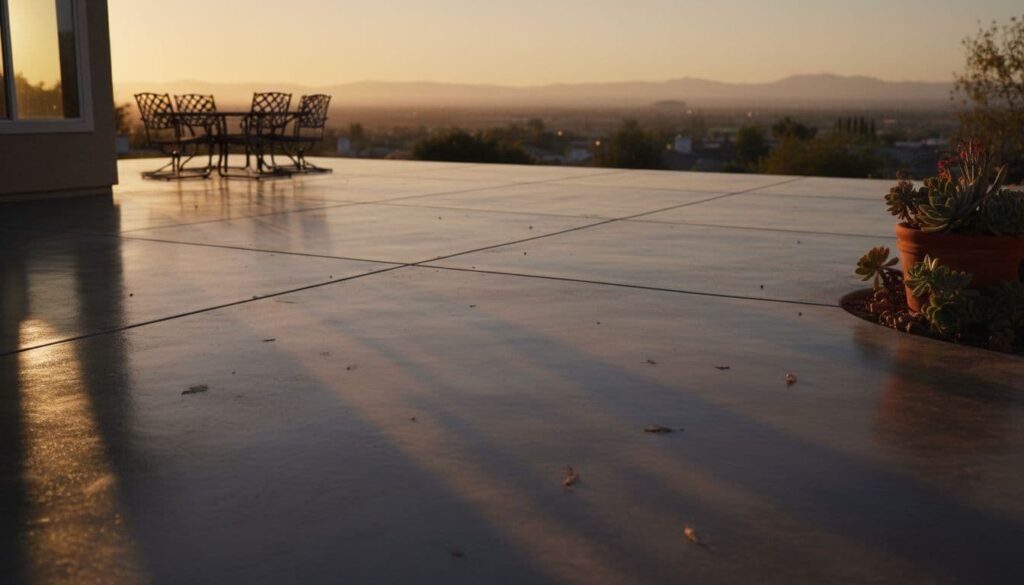
A Fresno summer can cook a patio like a griddle. By mid-afternoon, concrete in full sun can get much hotter than the air, then cool fast at night. That daily swing acts like bending a paper clip, over and over, until something gives.
A smart Fresno patio sealing schedule won’t stop every crack (concrete still moves), but it can slow surface wear, reduce moisture intrusion, and help your finish survive UV and heat. The trick is timing, prep, and picking the right sealer type for your patio and how you use it.
Why patios crack faster in Fresno and Clovis summers
Concrete expands when it heats up and shrinks when it cools. In the Central Valley, the sun is intense, the humidity is low, and shade lines move across the slab every day. That uneven heating makes one area expand while another lags behind. Stress builds.
A few local conditions make it worse:
- Hard clay soils: Common around Fresno and Clovis. They shrink when dry and swell after winter moisture, which can shift support under the slab.
- Water hits in the wrong places: Sprinklers, planters, and downspouts dump water on slab edges, then edges dry out fast in the heat. That wet-dry cycle invites curling and small cracks.
- Control joints get ignored: Joints are there to “choose” where cracks happen. When joints fill with dirt or old sealer, they stop working properly.
Hairline cracks are normal. The goal is to keep them from turning into spalling, scaling, or wider openings that funnel water under the concrete.
What sealing helps with (and what it can’t fix)
Sealer is a wear layer or a water-repellent, depending on the type. It helps most with surface problems, not structural movement.
Sealing helps:
- Slows water absorption that can carry salts and grime into the pores
- Reduces freeze damage risk (rare here, but cold snaps happen)
- Cuts down UV fading on colored or stamped finishes
- Makes cleanup easier after BBQ grease, leaves, and dirt
Sealing won’t:
- Stop a slab from moving on soft spots or expansive soil
- Fix poor drainage that sends water back toward the house
- Hide major surface defects without repair or resurfacing
The best time to seal concrete in Fresno (temperature, sun, and wind rules)
In this area, the best times to seal concrete are usually spring and early fall. You want mild temps, no huge evening temperature swings, and a moderately warm slab (not scorching hot like in the summertime).
Use these practical thresholds as your go-no-go checklist (always confirm the label for your sealer):
- Air temperature: Aim for about 55°F to 85°F during application and early cure.
- Surface temperature: Try to keep the concrete under about 90°F. In direct sun, the surface can run far hotter than the air.
- Time of day: Early morning is best. Stop before the slab gets hot. Afternoon sealing is where most bubbling and roller marks start.
- Wind: If it’s gusty (around 10 to 15 mph or more), expect fast solvent flash-off, lap lines, and overspray problems with sprayers.
- Moisture: Avoid sealing right after rain or heavy watering. Also, avoid nights with heavy dew if the coating is still “green.”
Stamped or decorative patios need even tighter temperature control because film-forming sealers can trap vapor and blush (turn cloudy). This temperature-focused explainer is helpful background: Proper Concrete Sealing, Stamped Concrete Temperatures.
A simple Fresno patio sealing schedule (calendar-style)
Your patio doesn’t need attention every weekend. It needs the right checks at the right season.
| Month | Central Valley reality | What to do | Why it matters |
|---|---|---|---|
| Jan | Cool, occasional rain | Inspect puddling, clear drains | Winter moisture finds weak spots |
| Feb | Cool, mixed weather | Wash mildew, check joints | Dirty joints trap water and grit |
| Mar | Warming up | Deep clean, plan repairs | Prep before heat ramps up |
| Apr | Mild, drier days | Spot crack and joint repairs | Repairs bond better in mild temps |
| May | Warming fast | Best sealing window (early mornings) | Seal cures cleaner before peak heat |
| Jun | Hot days start | Avoid full sealing if slab gets hot | Heat raises failure risk |
| Jul | Peak heat | Maintenance wash, shade care | Keep surface cooler, reduce drying stress |
| Aug | Still hot | Watch sprinkler overspray | Overspray stains and weakens edges |
| Sep | Nights cool off | Second sealing window | Better cure conditions return |
| Oct | Mild, shorter days | Final sealing and touch-ups | Set protection before winter moisture |
| Nov | Cooler, occasional rain | Clear leaves, keep joints clean | Organic stains set in damp weather |
| Dec | Cool | Inspect for new cracks | Plan spring fixes early |
Prep work that prevents peeling, whitening, and slick spots
Most sealer failures are prep failures. A sealer can’t bond to dust, sunscreen overspray, BBQ grease, or old flaking film.
Keep it simple and thorough:
Clean: Pressure washing helps, but don’t etch the surface. Use a cleaner that matches the stain (degreaser for oil, rust remover for rust). Rinse well.
Dry: Concrete needs time to dry deep in the pores. A quick field check is taping down a 2-foot plastic square for a few hours. If you see moisture under it, wait.
Fix joints and cracks first: Rigid patchwork over moving cracks will form its own cracks. Use a flexible crack or joint filler where movement is expected. Keep control joints open and functional.
Choose the right sealer type:
- Penetrating sealers (silane, siloxane): Soak in, leave a natural look, good for broom-finish patios and slip resistance.
- Film-forming sealers (acrylics and similar): Add sheen and color pop, common on stamped concrete, but they’re more sensitive to heat, moisture vapor, and hot tires.
For a straightforward primer on protecting outdoor concrete, this guide lays out the basics well: Concrete Sealing 101: How to Protect Your Outdoor Spaces.
Can you seal close to summer anyway? Yes, but follow heat rules
Sometimes you inherit a bare patio in June, or a party is coming. If you must seal during warm months, stack the odds in your favor.
- Seal at sunrise, not late day.
- Work in thin coats. Thick sealer skins over and traps solvents or moisture.
- Create shade if possible (pop-up canopy, patio cover, or wait for shade later in the day).
- Keep foot traffic and pets off until it’s cured. Heat can make the surface feel dry while the film is still soft underneath.
If you want a patio that’s safe when wet, avoid “super glossy” choices on smooth trowel finishes. Ask for slip resistance options that fit your texture.
What if cracks already started?
First, figure out what kind of crack you have. Hairline shrinkage cracks are common. Wider cracks, offsets (one side higher), and cracks that keep growing point to movement or loss of support.
If the patio has multiple cracks, spalling, or a rough, worn surface, sealing is only step two. Step one is repair. A good overview of repair and overlay options is on our service page here: Concrete repair and resurfacing services in Fresno. Reach out for a free estimate.
FAQ: Fresno patio sealing
Can I seal in July?
You can, but it’s risky. If the slab is hot, film-forming sealers can bubble, haze, or leave roller marks. If July is your only option, seal at sunrise, keep coats thin, and avoid direct sun on the work area.
What if cracks already started?
Clean them and repair based on movement. Stable hairline cracks may stay cosmetic. Moving cracks and joints need a flexible filler, not a rigid patch. If you see height changes or spreading cracks, address support and drainage before sealing.
How often should I reseal my patio?
It depends on the sealer type and traffic. Penetrating sealers often last longer, while film-forming sealers may need more frequent refresh coats, especially on stamped patios in full sun. Recoat when water stops beading consistently, and the surface looks dry or chalky after cleaning.
Will sealing stop all future cracking?
No. Concrete cracks from shrinkage, temperature swing, and soil movement. Sealing helps limit surface damage and water-related problems, which keeps small cracks from turning into bigger repairs.
Conclusion
Fresno heat doesn’t give patios much mercy, but good timing changes everything. Plan your sealing for mild spring mornings or early fall, prep the surface like bond matters (because it does), and pick a sealer that matches your finish and slip needs.
If cracking is already active, fix movement and drainage first, then seal. Done right, Fresno patio sealing becomes routine maintenance, not a yearly scramble when the first summer cracks show up.